

An AI agent is a system that receives a goal, decides which steps to take, and acts in real tools to complete it, instead of only answering questions.
In short
- An AI agent is artificial intelligence that carries out tasks on your behalf, using tools that have been connected to it.
- OpenAI defines agents as systems that complete tasks independently on behalf of the user.
- According to OpenAI, a chatbot that gives one answer to one question is not an agent.
- In a business, the sensitive decisions stay with you: publishing, budget and messages to customers, all with your approval.
What is an AI agent, in one image
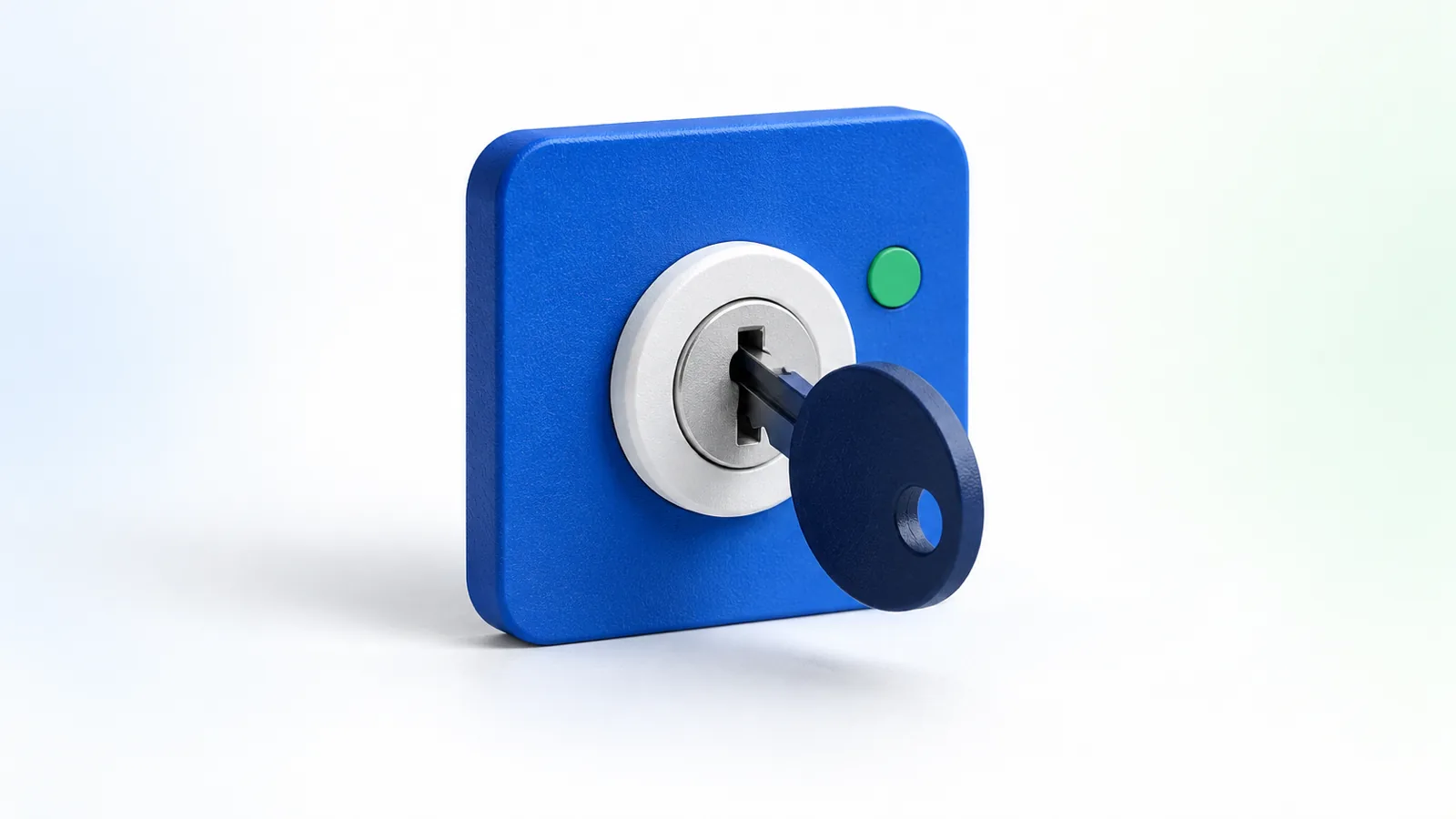
Picture an advisor you call on the phone. The advice is excellent, but you still have to go and do the work. Now picture an assistant who got a set of keys from you, for the rooms you chose only. You tell them what is needed, and they go in, do it and report back.
An AI agent is the assistant with the keys. ChatGPT in an ordinary chat is like the advisor on the phone. What separates them is not intelligence but access: the agent is connected to tools and has permission to act in them.
How does an AI agent work?
According to OpenAI's guide to building agents, an agent has three parts: a model that thinks and decides, tools it acts in (such as a website or an advertising platform), and instructions that define how to behave, including limits. What makes it an agent is that the model itself chooses which tool to use at each step.
From message to result
- You give a taskIn a message, like to an employee
- It plansDecides the next step
- It acts in toolsAnd checks the outcome
- You approveBefore anything goes out
Anthropic puts it this way: in an agent, the language model directs its own process and its use of tools. Steps 2 and 3 repeat in a loop until the task is done or until the agent needs a decision from you. The connection to tools often runs through an open standard, explained in the article What is MCP.
Why does this matter for a business?
Digital work in a small business is made of many small tasks that come back every week. Here are examples, for illustration, of tasks an agent can take on:
| Task | What the agent does | What stays with you |
|---|---|---|
| New products in the store | Uploads them as drafts, with a description and category | Approval before publishing |
| Weekly report | Collects data and summarizes it in plain words | Deciding what to do with the insights |
| Website problem | Checks, fixes and runs a test | Approval for any significant change |
| Paid campaign | Suggests a change based on the data | Approval for every budget change |
For the full picture, with examples from a working day, a time calculator and a readiness quiz, read the complete guide to AI agents for business.
When is an agent not the right fit?
Not every business needs an agent from day one. If you have no recurring digital work, or the task is a one-off, an ordinary conversation with ChatGPT is enough and costs less. The common mistake is to start with an agent that does everything. We recommend starting with two or three defined tasks, checking them, and only then expanding.
Five common myths
Myth"An AI agent is just a chatbot with a fancy name"
In practiceOpenAI itself draws the line: an application that uses a model without letting it control the execution of the task, like a simple chatbot that gives one answer, is not an agent. The difference is the ability to choose tools and act.
Myth"It acts on its own, with nobody in control"
In practiceInstructions and limits are defined in advance. OpenAI's guide describes guardrails as an essential part of every agent, and in a business you decide what needs human approval.
Myth"An agent knows everything and never makes mistakes"
In practiceModels can make mistakes. Start with defined tasks and check the outputs. More on this: What is an AI hallucination.
Myth"An agent suits every problem"
In practiceAnthropic also writes that agents add cost and the risk of errors, and that they should be used only when a simpler solution isn't enough. A fixed, well-defined routine is often the simple and good solution.
Myth"You have to be a programmer to use an agent"
In practiceYou use it in plain language. The connections and permissions are the job of whoever sets it up.
Related terms
- What is an LLM: the language model that serves as the agent's "brain".
- What is MCP: an open standard for connecting agents to tools.
- What is Computer Use: an agent that operates a computer like a person.
- What is Prompt Injection: the risk of outside content trying to mislead an agent.
- What is a token: the unit of text that models read and write.
Frequently asked questions
What is an AI agent?
An AI agent is an artificial intelligence system that receives a goal, decides which steps to take and acts in tools to complete it. OpenAI defines agents as systems that complete tasks independently on behalf of the user. In a business this usually means a language model connected to your website, store or advertising accounts, acting within the permissions you set.
How is an AI agent different from ChatGPT?
In ordinary use, ChatGPT answers what you ask and you carry it out. An agent is connected to tools and carries it out itself, within the limits that were set. The model behind it can be similar. The difference is the connection and the permission to act.
Can an AI agent act without my approval?
Only if you set it up that way. In a proper setup, publishing, budget changes and messages to customers in the business's name wait for your approval. Permissions are defined separately for each system.
Do you need technical knowledge to work with an AI agent?
No. You give tasks in an ordinary message. The connections, permissions and settings are handled by whoever sets up the agent. Platin Digital, an OpenAI Select Partner, sets up and supports agents for businesses.


